Technical SEO is the process of improving the behind-the-scenes structure of a website so search engines can crawl, render, understand, index, and serve its content correctly. In today’s search landscape, that matters more than ever because visibility is no longer limited to traditional blue links. Websites may also appear in AI Overviews, AI Mode, Bing Copilot experiences, rich results, and other answer-driven discovery surfaces.
Technical SEO helps by making sure:
• Search engines can access important pages without crawl barriers.
• Core content loads in the HTML or renders reliably.
• Pages send clear canonical, indexation, and structured data signals.
• Site performance supports a better user experience.
• Content is organized semantically so search and AI systems can understand relationships between topics.
The goal is not to “game” algorithms. Strong technical SEO creates a clean, fast, well-structured website that helps both people and machines interpret your content accurately.
Technical SEO Is No Longer Just a Backend Checklist
Technical SEO used to be treated as a one-time setup task: submit a sitemap, fix a few broken links, compress some images, and move on. That approach no longer fits how search works today. Modern search systems evaluate whether a website is accessible, useful, technically reliable, and easy to interpret across multiple discovery environments.
Google’s own documentation still emphasizes crawling and indexing as the foundation of search visibility, including the ability to control how search engines discover, parse, and show content across Google properties. That foundation matters even more as AI-driven search experiences summarize, synthesize, and cite information from web pages.
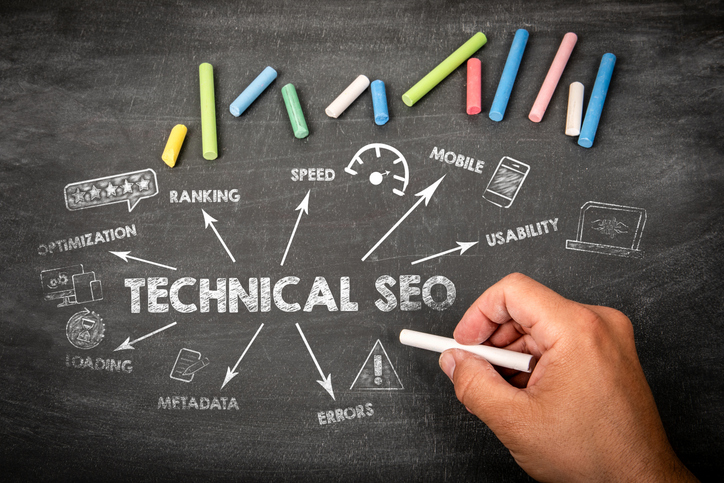
A technically sound website gives search engines fewer reasons to misunderstand your content. It also gives your content a stronger chance of being eligible for traditional rankings, rich results, and AI-assisted search surfaces. In practical terms, technical SEO connects your website’s architecture, performance, metadata, schema, internal links, and content accessibility into one visibility system.
The most important shift is this: technical SEO is no longer separate from content strategy. A page can be well-written, but if it is slow, buried, blocked, duplicated, missing schema, or dependent on unreliable JavaScript rendering, it may never perform as well as it should.
Crawlability and Indexability Still Come First
Before a page can rank, appear in an AI-generated answer, or earn visibility in search results, it must be discoverable and understandable. Crawlability is about whether search engines can find and access a URL. Indexability is about whether that URL can be stored and considered for search results.
Common crawl and indexation issues include blocked resources, accidental noindex tags, incorrect canonical tags, redirect chains, orphan pages, duplicate URLs, thin archive pages, and poor internal linking. These problems can quietly limit visibility even when the content itself is strong.
A modern technical SEO audit should review:
- Robots.txt rules and meta robots directives
- XML sitemap accuracy and freshness
- Canonical tags and duplicate page signals
- Redirects, broken links, and server response codes
- Internal linking depth and orphaned content
- Parameter URLs, faceted navigation, and crawl traps
Google also provides page-level and text-level controls, such as robots meta tags, X-Robots-Tag headers, and data-nosnippet, which can influence how content is indexed or displayed in search results. These controls are useful, but they should be applied carefully because small directive mistakes can remove important content from search visibility.
For AI search, crawlability has another layer of importance. Bing’s Webmaster Guidelines now describe eligibility not only for indexing and ranking, but also for grounding results and citations across Bing search experiences, Copilot, and grounding API results. That means clean technical access can affect visibility beyond standard organic listings.
Site Performance and Core Web Vitals Shape User Experience
Technical SEO is not only about bots. It is also about how real people experience a website. A slow, unstable, or frustrating page can reduce engagement, conversions, and trust. Search engines recognize this because page experience aligns with the types of results they want to reward.
Core Web Vitals focus on real-world user experience across loading performance, interactivity, and visual stability. Google recommends that site owners achieve good Core Web Vitals for success in Search and for a stronger overall user experience.
One major change in recent years is the shift from First Input Delay to Interaction to Next Paint. INP became a Core Web Vital on March 12, 2024, replacing FID as the key responsiveness metric. This matters because technical SEO teams now need to pay closer attention to how quickly pages respond after users interact with menus, buttons, filters, forms, and other page elements.
Important performance priorities include:
- Reducing unnecessary JavaScript
- Compressing and properly sizing images
- Using efficient caching and content delivery
- Improving server response times
- Avoiding layout shifts from ads, embeds, or late-loading media
- Testing pages on mobile devices, not just desktop tools
Performance improvements should be tied to business goals. A faster product page, service page, or lead-generation landing page can support both organic visibility and better conversion paths.
JavaScript SEO, Rendering, and Content Accessibility Matter More Than Ever
Many modern websites rely on JavaScript frameworks, dynamic content, personalization, and client-side rendering. These tools can create excellent user experiences, but they also introduce technical SEO risk when important content, links, metadata, or structured data are not available when crawlers first access the page.
Google can process JavaScript, but Google’s JavaScript SEO documentation still recommends making pages discoverable, renderable, and accessible for Search. The safest approach is to ensure critical content and links are available in a reliable way rather than assuming every crawler will render every page perfectly.
Technical SEO checks for JavaScript-heavy sites should include:
- Whether primary content appears in rendered HTML
- Whether internal links are crawlable as standard anchor links
- Whether title tags, meta descriptions, canonicals, and schema render correctly
- Whether important pages return the right status codes
- Whether lazy-loaded content is visible without user-only actions
- Whether mobile rendering matches desktop expectations
This is especially important for ecommerce websites, SaaS websites, directories, publishers, and businesses using modern front-end frameworks. When content is technically present for users but unclear to crawlers, search engines may underinterpret the page’s value.
In an AI search environment, clarity matters even more. Generative systems often need clean page structure, identifiable entities, concise answers, and consistent supporting details to understand what a page is about and whether it is useful enough to cite or summarize.
Structured Data and Semantic Signals Help Search Engines Understand Context
Structured data is not a shortcut to rankings, but it is a powerful clarity signal. It helps search engines understand what a page represents, such as an article, product, service, FAQ, organization, local business, event, review, recipe, or video.
Semantic SEO works alongside structured data. Instead of repeating one keyword over and over, semantic optimization builds meaning through related terms, entities, subtopics, examples, and clear page sections. For a topic like technical SEO, semantic coverage might include crawl budget, indexation, canonicalization, site architecture, Core Web Vitals, structured data, JavaScript rendering, mobile usability, page experience, internal links, log files, and XML sitemaps.
A strong semantic structure usually includes:
- A clear primary topic
- Descriptive headings that match user questions
- Supporting subtopics that explain related concepts
- Entity-rich language that clarifies people, places, brands, services, and tools
- Concise definitions that answer informational queries directly
- Internal links that connect related pages naturally
This approach matters for traditional search and AI discovery. Research into generative search has found that AI search systems may source information differently from traditional Google results, and that citation behavior can vary across engines, queries, and phrasing. While no one can guarantee AI placement, content that is technically accessible, clearly structured, and semantically complete is easier for machines to evaluate.
Technical SEO and semantic SEO should work together. The technical layer makes the content accessible. The semantic layer makes the content understandable.
Technical SEO for AI Search and Answer Engines
AI search has changed how users discover information. Instead of only scanning a list of links, users may now see AI-generated summaries, cited sources, conversational follow-ups, and synthesized answers. Google’s AI guidance for site owners says the same fundamentals that help pages succeed in Search also apply to generative AI features: create helpful, reliable, people-first content and make it accessible to Google.
For technical SEO, this means the website must support both retrieval and interpretation. AI systems need to identify the page, understand the main answer, connect claims to supporting context, and determine whether the source is useful. A page that hides key information, uses vague headings, lacks entity clarity, or creates conflicting technical signals may be harder to evaluate.
Practical AI-era technical SEO priorities include:
- Keep important content crawlable and indexable.
- Use clear headings that reflect real informational intent.
- Add structured data where it accurately describes the page.
- Maintain consistent business details across the website.
- Use descriptive internal links to connect related expertise.
- Create concise answer-style sections for common questions.
- Avoid blocking important content from search systems unintentionally.
Bing’s support for IndexNow also shows how freshness and automated URL submission are becoming more important, especially for websites with frequent updates. Bing recommends IndexNow as a faster, automated URL submission method across participating search engines.
The takeaway is not that technical SEO has become less important because of AI. It has become more important because AI-driven discovery depends on clean, accessible, well-labeled information.
Build the Technical Foundation Before Chasing Visibility
Technical SEO is the infrastructure behind digital visibility. It helps search engines crawl the right pages, index the right versions, understand the right context, and deliver a better experience to users. In the current search landscape, that foundation supports traditional rankings, rich results, local discovery, and emerging AI search experiences.
The best technical SEO strategies are not built around isolated fixes. They connect site speed, crawlability, internal linking, structured data, semantic clarity, mobile usability, and content quality into one system. When that system works, your website becomes easier for both people and search engines to trust.
For businesses that want stronger visibility in modern search and AI-assisted discovery, Zenergy Works can help identify technical gaps, improve content structure, and build a practical SEO strategy designed for how people search today.